Date: Friday, 4 September 2026 (Smarta households) and Saturday, 5 September 2026 (Vaishnava sampradaya and ISKCON), based on the Ashtami tithi of Krishna Paksha, Bhadrapada, for New DelhiObserved as: Krishna Janmashtami / GokulashtamiBest reader action: Check your local panchang if you are outside India.
What to keep ready before the sun goes down
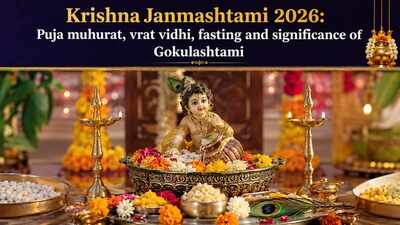
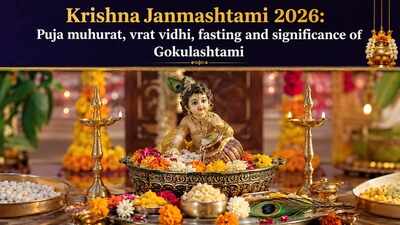
Start with the murti itself, usually a small Bal Gopal or Laddu Gopal idol, and a clean wooden chowki to seat him on. For the abhishek, or ceremonial bath, you need milk, curd, ghee, honey and sugar to make panchamrit—the five ingredients together representing the five basic tastes. Keep tulsi leaves nearby, a few drops of Gangajal if you have it, and plain water for the final rinse. You’ll also want a peacock feather, a small flute, fresh flowers, a garland, and new or freshly washed clothes for the idol.No panchamrit ingredient is irreplaceable. If you don’t have honey, skip it rather than substituting sugar syrup, since scriptural lists tolerate a missing item more easily than an incorrect one. Malai works if fresh curd isn’t available.
Why the bath comes before the cradle
The order of a Janmashtami puja isn’t arbitrary, and skipping steps changes what the ritual means. You clean the idol and the space first, then perform the abhishek, then dress and decorate the idol, and only then place Krishna in the jhula, or decorative cradle, and begin the aarti.The logic is simple: you don’t dress a newborn before washing him.Pour the panchamrit slowly over the murti, followed by plain water, then pat it dry with a soft cloth before applying sandalwood paste and kumkum as tilak. Many households repeat a shorter version of this after the midnight puja too, since the actual “birth” hasn’t happened until then. Doing the elaborate abhishek only after midnight, and keeping it brief beforehand, respects that sequence.
The hour the whole fast is built around
Everything on this day points towards Nishita Kaal, the depth of night when Krishna is believed to have been born inside Kansa’s prison cell. For New Delhi in 2026, this window falls between roughly 11:55 PM on 4 September and 12:42 AM on 5 September.This is when you perform the main abhishek, dress the infant Krishna, ring the bell, blow the conch, and sing the aarti that marks his arrival.Rohini nakshatra, the star under which Krishna was born, runs from 2:59 PM on 3 September to 1:34 PM on 4 September this year, so it doesn’t overlap with the birth moment itself in 2026, though tradition still centres the day around Ashtami meeting Rohini whenever the calendar allows it.
One birth, two calendars
Here’s where readers get confused every year, and it isn’t a mistake by either side. Smarta households, who follow the broader mainstream calendar, observe Janmashtami on Friday, 4 September 2026, because the Ashtami tithi prevails at midnight that night.Vaishnava sampradaya followers and ISKCON temples observe it on Saturday, 5 September, because their calculation gives more weight to Ashtami holding at sunrise the next morning, combined with Rohini’s presence.Both groups are reading the same panchang correctly under different rules for which moment counts. If your family has always fasted on a particular day, that’s the tradition to follow. If you’re unsure, ask your local temple which sampradaya’s calendar it uses.
Breaking the fast without guessing
Parana, or breaking the vrat, is where sources genuinely disagree this year, so don’t take any single number as final. Some panchangs place the parana after the Ashtami tithi ends around midnight on 4–5 September, letting devotees eat once the birth moment has passed. Others push it later, into the morning of 5 September, tying it to sunrise and tithi completion together.Check your own local panchang before deciding, especially if you’re fasting strictly. What nearly everyone agrees on is that you shouldn’t break the fast before the Nishita Kaal puja is done, regardless of which exact clock time you use afterward.
What the fast is actually asking of you
Strip away the panchamrit and the jhula, and the vrat is really about staying alert through a night most people sleep through, the way Devaki and Vasudeva had to stay alert as Krishna was smuggled out of prison to safety in Gokul.Many devotees keep a nirjala fast, taking no water at all, though plenty of households allow fruit, milk and sabudana through the day and treat the strict version as optional rather than mandatory.Reading or listening to the Krishna Janma Katha, the story of his birth and the danger surrounding it, during the wait for midnight isn’t filler. It’s the reason the wait matters, turning a long evening into something closer to keeping watch with the family that hid him.
Where the mistakes creep in
The most common error is rushing the abhishek before midnight because people get sleepy, which defeats the point of a birth ritual timed to an exact hour.The second is using leftover or store-bought panjiri and sweets without offering them fresh, when even a simple homemade dhaniya panjiri carries more meaning than an elaborate store-bought one.Third, many households forget the tulsi leaf entirely, treating it as decorative rather than essential to the bhog offered to Krishna.In Maharashtra, none of this competes with Dahi Handi, where young men called Govindas build human pyramids to break a curd pot hung high above the street, re-enacting Krishna’s butter theft in front of an entire neighbourhood.Gujarat has its own version, called Makhan Handi, around Dwarka, while Tamil Nadu and Kerala keep things quieter, drawing tiny rice-flour footprints from the doorway to the puja room, tracing the path of a baby God walking into someone’s home.