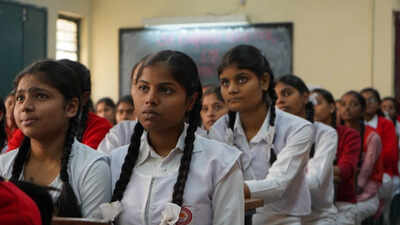
The Bihar government has designated five District Institutes of Education and Training (DIETs) as regional language enrichment centres to promote the state’s linguistic heritage and strengthen mother tongue-based education in schools. The centres will focus on Maithili, Magahi, Bhojpuri, Angika, and Bajjika, with separate institutes assigned to each language.The initiative, approved by Bihar Education Minister Mithilesh Tiwari, will be implemented through the State Council of Educational Research and Training (SCERT). Officials said the move is aligned with the National Education Policy (NEP) 2020, which emphasises the use of children’s mother tongues and regional languages in the teaching-learning process.According to a report by PTI, the five centres will work towards developing language-specific academic resources, strengthening teachers’ capacity to teach in regional languages, and documenting Bihar’s folk literature and cultural traditions.
Five DIETs assigned responsibility for regional languages
Under the new arrangement, five DIETs across Bihar have been selected to function as regional language enrichment centres. Each institute will concentrate on one language and undertake activities related to its promotion and integration into education.The designated institutes and their respective languages are:
| DIET location | Language assigned |
| Darbhanga | Maithili |
| Gaya | Magahi |
| Saran | Bhojpuri |
| Bhagalpur | Angika |
| Muzaffarpur | Bajjika |
The centres will serve as dedicated platforms for developing educational material and strengthening the academic use of these languages. Their work will also include documenting regional literature, folk traditions, and linguistic resources that can be incorporated into teaching and learning activities.
Teacher training , learning material and research among key responsibilities
The five centres will be tasked with preparing teaching and learning materials specific to their respective languages. They will also organise teacher training programmes, workshops and other academic activities to help educators incorporate regional languages into classroom instruction.Another major area of work will be research into mother tongue-based education and its impact on students’ learning outcomes. The centres will document regional languages and folk literature, creating resources that can support both classroom teaching and further academic research.The initiative is aimed at making classroom learning more accessible and child-friendly, particularly for students who are more comfortable learning in their mother tongue. Officials said the use of familiar languages could improve students’ linguistic comprehension while helping preserve Bihar’s diverse cultural heritage.
Five-member committees to oversee activities at each centre
Each regional language enrichment centre will have a five-member committee to coordinate its academic and cultural activities. The committee will comprise a nodal officer, a language expert, and three invited members.The invited members may include academicians, writers, folk artists, and teachers with expertise in the respective regional languages.These committees will be responsible for developing resource libraries, publishing journals, and organising literary and cultural programmes. They will also help identify relevant material and resources for promoting the languages through educational activities.According to a notification issued by the Bihar Education Department, the designated committees have been directed to submit their reports to SCERT within 10 days.
Bihar schools directed to keep teachers free during school hours
Separately, the Bihar Education Department has issued directions to improve the utilisation of teachers’ time in schools. Additional Chief Secretary of the Education Department C K Anil issued a directive last week instructing officials to ensure that teachers are not called away from schools for meetings, training sessions, video conferences, or workshops during school hours.The directive seeks to ensure that teachers remain available for classroom responsibilities instead of being engaged in administrative and other departmental activities during teaching hours.The two developments come amid efforts by the state education department to strengthen classroom instruction, improve the availability of academic resources, and address the needs of students and teachers across government schools.(With inputs from PTI)