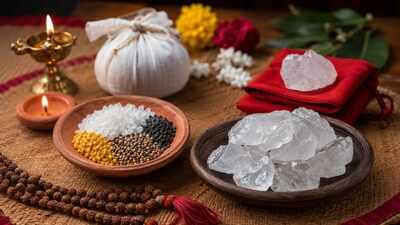
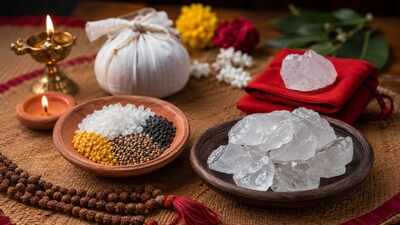
Fitkari (alum) is a naturally available mineral, which is used in Indian homes for daily purposes like purification of water, personal grooming and minor first aid. And it has a special meaning in traditional spiritual practices. Families have been using fitkari in symbolic rituals for generations, believing it brings positivity, protection and harmony. It has no scientific basis but is still popular in different parts of the country and often handed down as family traditions based on cultural and spiritual beliefs.
A symbol of prosperity for businesses
A very common practice is to take a small piece of white fitkari wrap it in red cloth and hang it near the entrance of a shop, office or workplace. Traditionally, the ceremony is believed to be an invitation to welcome positive opportunities, and to help clear away stagnant or negative energy in business premises. Proponents of the practice point out the fact that it’s a symbolic gesture of optimism and, for the most part, is accompanied by dedication, planning and consistency in business activities.
Traditional nazar remedy
Fitkari is also used in rituals associated with the warding off of the “evil eye” (nazar). According to local customs, a piece of fitkari, a pinch of rock salt and a few black mustard seeds are taken and rotated in a circle seven times around the patient and then safely discarded or burnt. It is regarded as a symbolic act of spiritual cleansing and is still observed in many Indian homes.
Creating a peaceful sleeping environment
One traditional remedy is to keep a small piece of fitkari under or near your bed for a few nights. Families who keep up this tradition say it makes a peaceful, tranquil setting that is good for a night’s sleep. These beliefs may not be scientific but rather traditional, but they are still part of the bedtime routine in some homes.
Beliefs linked to children’s education
In some homes, some parents keep a small piece of fitkari near the study table of a child or in the drawer of a desk. It is usually said to reduce distractions, increase concentration and create a better learning environment.For many families the rite is a way to help create a positive learning environment and instill disciplined study habits.
Bring positivity into your home
Another popular practice is to wrap a little bit of fitkari in a white cloth and hang it near the main entrance of the house. Many families also light an evening diya in their homes as part of their daily spiritual routine, believing it brings about a peaceful and harmonious home environment. These rites are frequently incorporated into more comprehensive household customs emphasizing daily worship, prayer, and thanksgiving.
A tradition over the years
Culture experts say fitkari has long been valued not only for its usefulness around the house but also for its symbolic importance in Indian traditions. They are still handed down from generation to generation, representing the rich cultural heritage of the country and the belief in the traditional rituals of long ago. But experts say these are spiritual as well as symbolic cures. They are not scientifically proven methods , but rather expressions of personal belief and cultural tradition . Common sense, good judgment and sound professional advice still have a role to play in business, health, education and general well-being.